



Continuous cybersecurity, in 4 clear steps
We open the method. No black box, no hooded hacker, no magic promises. See exactly what Defenzor does for your company in the next 24 hours.
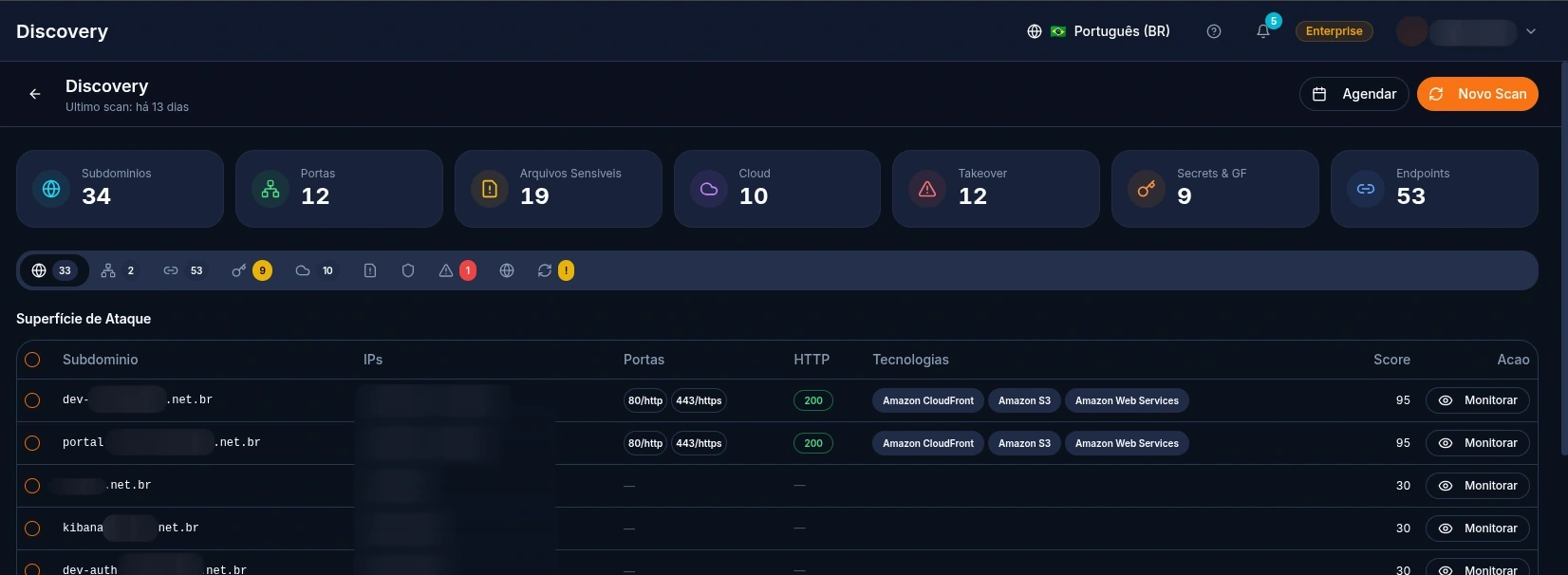
1. We discover everything your company exposes on the internet
You add a domain. We do the rest.
Within 4 hours of registration, Defenzor automatically maps every public asset related to your company: domains, subdomains (including the ones nobody remembers), IP addresses, SSL certificates, DNS records, open ports, email configurations (SPF, DKIM, DMARC), web applications and APIs.
This mapping is the part that surprises customers most. On average, we find 3x more assets than the IT team expected — legacy systems, forgotten staging environments, marketing tools no one disabled, subdomains created by teams that no longer exist.
Everything is collected passively, from public sources. We don't run invasive tests, we don't touch anything internal, we don't need credentials. It's exactly what a criminal would do in the first minutes before planning an attack — except on your side.
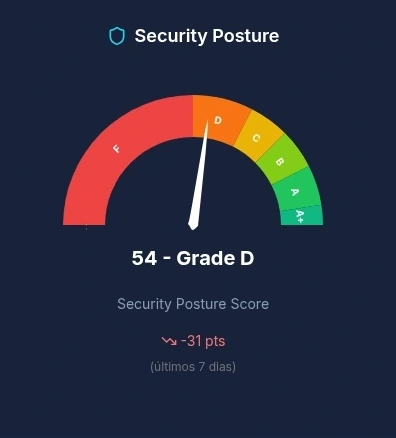
2. We assess your posture and generate an A-to-F grade
Each asset goes through 50+ automated checks, grouped into 7 categories: network, cryptography, email, application, exposed data, third parties, and performance.
The results consolidate into a single grade — A to F — representing your company's overall cybersecurity posture. The score is recalculated in real time whenever something changes in your perimeter.
The grade is not arbitrary. Each category has a weight defined by probability of exploitation and financial impact of an incident. Companies graded F are on average 4.2x more likely to suffer an incident in the following 12 months than companies graded A.
You use this score for three things: prioritize what to fix first, benchmark your maturity against your industry, and present the real cybersecurity status to your board or to a customer who asked for certification.
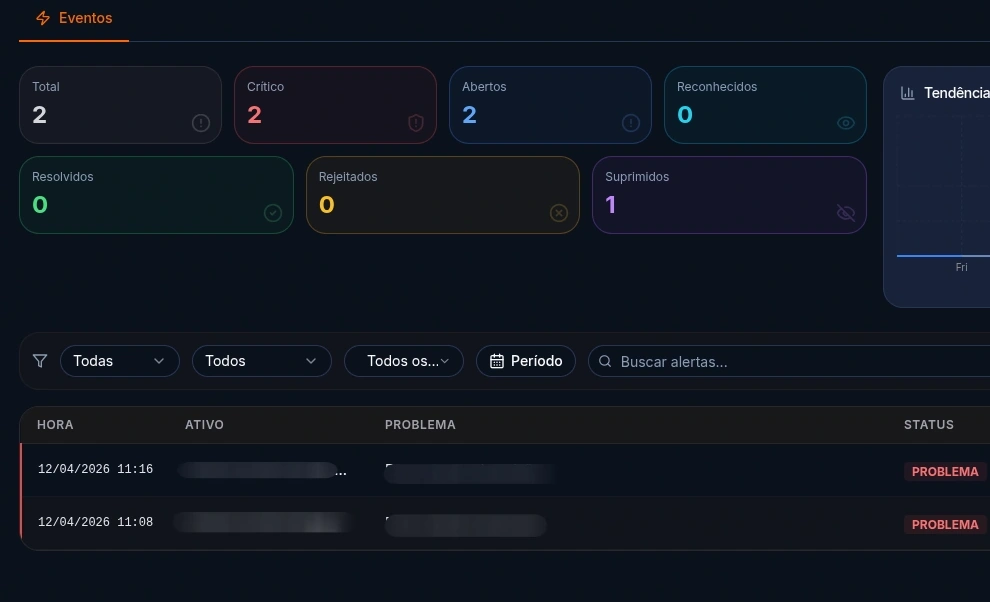
3. We alert you when something changes — in real time
Cybersecurity is not a photo, it's a movie. Your company changes every day: someone buys a new certificate, a team spins up a server for a test, an employee creates a subdomain without telling anyone.
Defenzor monitors your assets every 15 minutes and fires an alert whenever it detects something relevant: certificate expiring in less than 30 days, new subdomain appearing, corporate credentials in a public leak, DNS configuration changing without reason, security header removed in production.
Alerts arrive via email, Slack, or webhook (ticketing tool integration). Each alert comes with context: what changed, when it changed, what the risk is, and — most importantly — what to do to fix it, with specific instructions.
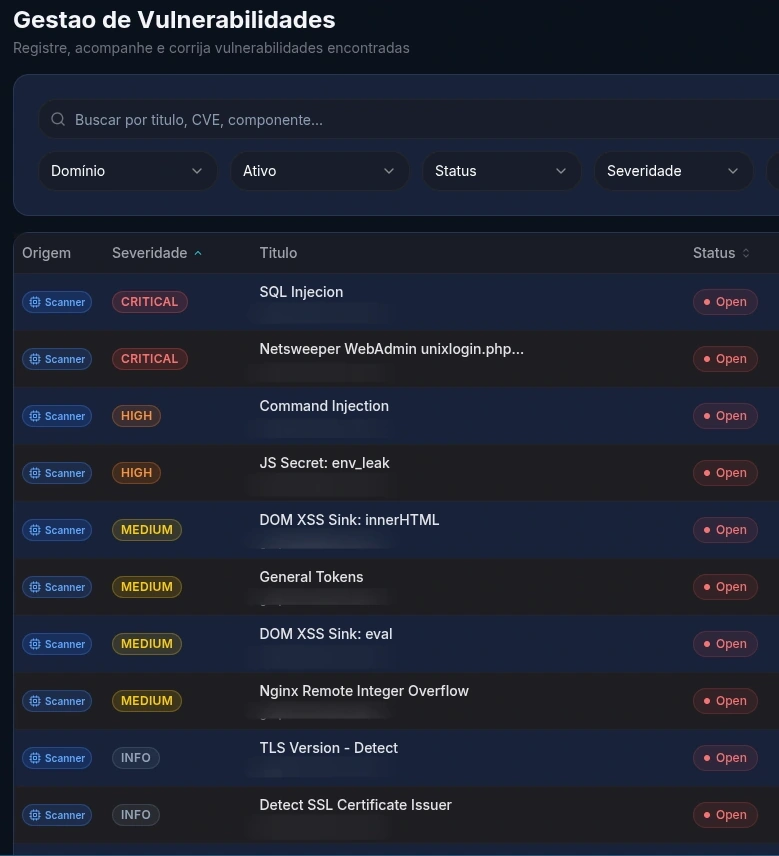
4. We track your vendors and supply chain
Compliance frameworks like LGPD (Brazil) and BACEN 4893 already establish: you are responsible for what your vendors do with your data. But how do you audit the cybersecurity posture of 30, 50, 100 vendors manually?
Defenzor lets you register third parties and monitors each one's posture continuously — with the same methodology we apply to your company. You see each vendor's score, get alerted when one's grade drops, and can generate consolidated audit reports.
Use it for three things: filter vendors at contracting time (don't hire someone graded F), monitor whoever is already in (and require fixes when a grade drops), and prove to your enterprise customer that you're meeting your supply-chain monitoring obligation.
How each grade translates to risk
Strong posture, minimal exposure, configurations aligned with best practices
Healthy posture, with 1-3 recommended adjustments
Visible vulnerabilities that deserve attention within 30 days
Critical exposures that should be fixed within 7 days
Imminent incident risk. Action in 24-48h
What we check, in detail
For the technical visitor (CISO, IT manager) who scrolled this far out of curiosity. 50+ automated checks across 7 categories.
- Open ports and exposed services
- IP geolocation and ASN
- Orphan hosts with no clear owner
- Reverse DNS configuration
What Defenzor does NOT do
To close the conversation honestly, it's worth saying what's out of scope:
We don't test your application from the inside
For that, the right path is a one-off pentest with Gila Security (the consultancy that created Defenzor) — pentest assesses depth, Defenzor assesses perimeter continuously. They complement, not substitute.
We are not a SIEM or a SOC
If your company needs internal log monitoring, lateral-movement detection, or real-time incident response, you need a different tool. Defenzor looks at what's exposed outward.
We don't replace your antivirus, EDR or firewall
Those handle the internal environment. Defenzor handles the external surface. Different layers of the same problem.
We don't promise immunity to attacks
Whoever promises that is lying. We promise continuous visibility over your exposure — you decide what to fix and when.
See your A-F grade in 5 minutes
Sign up two assets for free. No credit card, no sales call.
Start free now